Optoma Projector User Guide: A Comprehensive Overview (Updated 02/26/2026)
Welcome! This guide provides a detailed exploration of your Optoma projector, covering setup, features, troubleshooting, and maintenance for optimal performance.
Explore manuals in multiple languages, including Russian and Arabic, alongside technical specifications and safety guidelines for a complete user experience.
Optoma is a leading manufacturer renowned for delivering high-quality DLP projectors catering to both home entertainment and professional business applications. Their extensive range includes solutions for immersive cinematic experiences, vibrant gaming setups, and impactful presentations.
These projectors utilize Digital Light Processing (DLP) technology, known for its sharp image clarity, excellent contrast ratios, and reliable performance. Optoma consistently innovates, offering features like 3D compatibility (with the 3D-XL Converter) and diverse connectivity options – HDMI, VGA, and USB – to seamlessly integrate with various devices.
Furthermore, Optoma provides comprehensive support, including detailed user manuals available in multiple languages, ensuring a user-friendly experience for a global audience.
Unboxing and Initial Setup
Carefully unpack your Optoma projector, verifying all included components: the projector unit, remote control, power cord, and any accompanying documentation like the user manual. Inspect for any visible damage incurred during shipping.
Place the projector on a stable, level surface or mount it securely. Connect the power cord to a grounded outlet. Before powering on, ensure the lens cap is removed. Initial setup involves selecting your preferred language and configuring basic settings like keystone correction and focus – detailed later in this guide.
Refer to the included quick start guide for a streamlined initial experience.
Understanding Projector Components
Familiarize yourself with the key components of your Optoma projector. The lens projects the image, requiring careful handling and cleaning. Ventilation openings are crucial for preventing overheating – never obstruct them. The control panel allows manual operation, while input ports (HDMI, VGA, USB) connect external devices.
The lamp housing contains the projector’s light source. Understand the location of the filter for periodic maintenance. The power connector supplies electricity, and the speaker provides audio output. Knowing these components aids in troubleshooting and proper usage.
Remote Control Functions
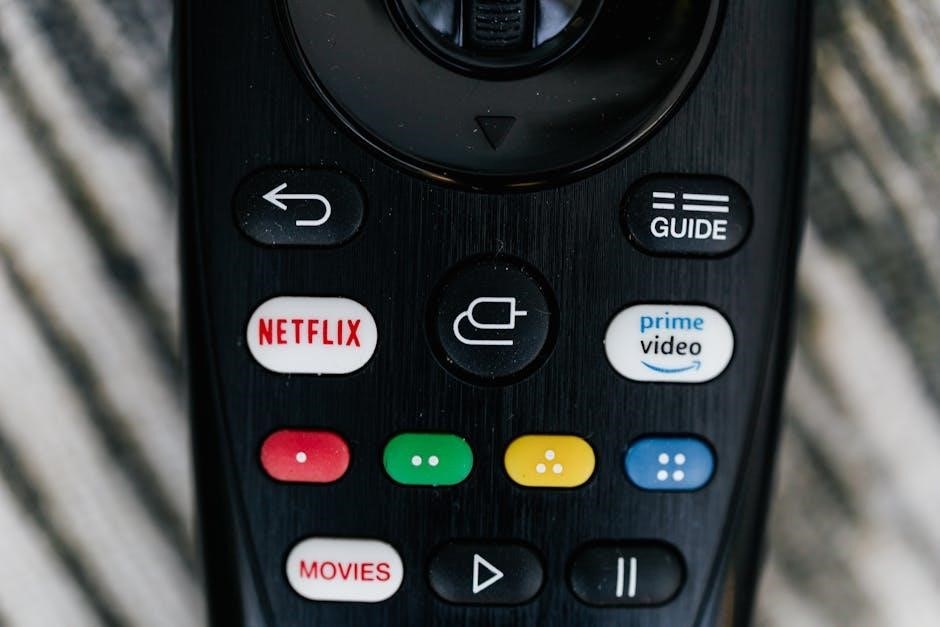
Mastering the remote unlocks your Optoma projector’s full potential. Power buttons control on/off functionality. Input selection allows switching between connected devices (HDMI, VGA, USB). Menu navigation buttons access settings for image adjustment and advanced configurations.
Keystone correction and focus controls refine image clarity. Volume controls manage audio output. Explore preset modes for optimized viewing experiences. The remote is your central hub for effortless projector control and customization.
Basic Remote Operations
Powering on/off is achieved with dedicated buttons. Use the directional pad to navigate the on-screen menu. The Enter/OK button confirms selections. Source selection is simplified with direct input buttons (HDMI, VGA, USB). Adjust volume using the +/- buttons.
Mute functionality provides instant audio control. The Menu button accesses core settings. These fundamental operations ensure easy and intuitive projector control for a seamless viewing experience. Familiarize yourself with these basics for optimal usability.
Advanced Remote Settings
Picture-in-Picture (PIP) control, if supported, allows simultaneous display of multiple sources. User mode settings enable customized configurations for various viewing environments. Explore image settings for detailed color adjustments and preset selections. Utilize the reset function to revert to factory defaults.
Keystone correction and focus can be fine-tuned via remote access. Lamp settings offer control over brightness and lifespan. These advanced features provide granular control, optimizing your viewing experience beyond basic operation.

Connecting to Power and External Devices
Power Connection: Always use the provided power cord and a grounded outlet. Input Sources: Connect devices via HDMI for high-definition video and audio. VGA supports analog signals, while USB enables media playback. Ensure proper cable connections for stable signal transmission.
Powering On/Off: Use the remote or projector’s power button. Allow the projector to cool down before disconnecting power. Verify input source selection using the remote’s ‘Source’ button for seamless switching.
Powering On/Off Procedures
Powering On: Press the power button on the projector or remote. The power indicator will illuminate, and the projector will initiate startup. Allow sufficient time for the lamp to reach optimal brightness. Powering Off: Select “Power Off” from the menu or press and hold the power button;
Important: Never unplug the projector while it’s operating. Always allow the cooling fan to complete its cycle after powering off to prevent damage and extend lamp life.
Input Source Selection (HDMI, VGA, USB)
Selecting Your Source: Use the “Source” or “Input” button on the remote to cycle through available connections. Optoma projectors commonly support HDMI for high-definition devices, VGA for older computers, and USB for media playback.
Connection Tips: Ensure cables are securely connected. For optimal image quality, HDMI is recommended. USB functionality may vary depending on the projector model and file compatibility.
Image Adjustment and Calibration
Optimizing Your Picture: Achieving the best image quality requires careful adjustment. Begin with basic settings like brightness, contrast, and sharpness using the projector’s menu. Explore preset modes (e.g., Cinema, Dynamic, Game) for quick optimization.
Advanced Calibration: For precise control, delve into color settings. Fine-tune RGB values and gamma correction. Utilize keystone correction and focus adjustments to eliminate distortion and ensure a clear, rectangular image.
Keystone Correction & Focus Adjustment
Correcting Image Geometry: Keystone correction rectifies trapezoidal distortion when the projector isn’t perfectly aligned. Utilize both vertical and horizontal keystone adjustments for a square image. Digital keystone correction is available, but may slightly reduce image quality.
Achieving Sharpness: Precise focus is crucial. Use the focus ring to sharpen the image. For optimal clarity, ensure the projection surface is flat and smooth. Minor adjustments may be needed after keystone correction is applied.
Color Settings and Presets
Optimizing Visuals: Optoma projectors offer pre-set color modes – Cinema, Dynamic, Standard, and User – tailored for different viewing environments. Cinema delivers accurate colors for movies, while Dynamic boosts brightness for well-lit rooms.

Customization Options: The ‘User’ mode allows granular control over color temperature, RGB levels, and gamma settings. Experiment to achieve your preferred image. Adjusting these settings impacts color accuracy and overall picture quality, so subtle changes are recommended.
3D Functionality and Setup (Using 3D-XL Converter)
Immersive Viewing: Optoma projectors support 3D viewing when paired with compatible 3D glasses and content. The 3D-XL converter enables 3D playback from standard 2D sources, enhancing depth perception.
Setup Procedure: Ensure your projector is compatible and the 3D-XL converter is correctly installed. Activate 3D mode in the projector’s settings and synchronize the 3D glasses. Proper alignment and compatible content are crucial for a seamless 3D experience.
Lamp Life and Replacement
Optimizing Lamp Performance: Optoma projector lamps have a finite lifespan, varying based on usage and settings. Utilizing Eco mode significantly extends lamp life while maintaining acceptable brightness levels. Regular monitoring of lamp usage is essential for proactive replacement.
Replacement Procedure: When the lamp nears its end, a warning message will appear. Carefully follow the instructions in the user manual to safely replace the lamp, ensuring the projector is cooled down before commencing the process.
Monitoring Lamp Usage
Tracking Lamp Hours: Your Optoma projector features a built-in lamp usage timer, accessible through the on-screen menu. Regularly check this timer to determine the remaining lamp life and plan for timely replacement. Accurate tracking prevents unexpected interruptions during presentations or viewing sessions.
Warning Indicators: The projector displays a warning message when the lamp is nearing its end-of-life. Heed this warning and order a replacement lamp promptly to avoid potential image quality degradation or complete lamp failure.
Lamp Replacement Procedure
Safety First: Before replacing the lamp, power off the projector and allow it to cool completely – at least 30 minutes. Disconnect the power cord to prevent accidental shock. Consult your projector’s specific model manual for detailed, step-by-step instructions.
Careful Handling: Gently remove the lamp module and handle the new lamp with care, avoiding direct contact with the glass bulb. Securely install the new lamp module and reassemble the projector, ensuring all screws are tightened.
Troubleshooting Common Issues
No Image? Verify the power connection, input source selection, and lamp status. Ensure the projector is not in standby mode. Audio Problems? Check the audio cable connections and volume levels on both the projector and connected devices.
Still facing issues? Consult the comprehensive user manual or Optoma’s support website for detailed troubleshooting steps. Consider resetting the projector to factory defaults as a last resort. Remember to document any error messages for support assistance.
No Image Displayed
Problem: A blank screen despite the projector being powered on. Solutions: First, confirm the power cable is securely connected. Next, verify the selected input source matches the connected device (HDMI, VGA, etc.). Check the lamp status – a faulty lamp will cause this issue.
Further checks: Ensure the lens cap is removed! Try a different cable or input source. If the problem persists, consult the full user manual or Optoma support for advanced diagnostics.
Audio Problems
Issue: No sound or distorted audio during playback. Troubleshooting: Begin by verifying the volume level on both the projector and the connected audio device. Confirm the correct audio output is selected within the projector’s settings menu.
Additional steps: Ensure audio cables (HDMI, 3.5mm) are firmly connected. Test with different cables or an external speaker system to isolate the problem. Check for muted settings on source devices.
Maintenance and Cleaning
Regular maintenance ensures optimal performance and extends the lifespan of your Optoma projector. Cleaning the lens is crucial; use a soft, lint-free cloth specifically designed for optics. Avoid liquid cleaners, as they can damage the lens coating.
Filter replacement is essential for preventing overheating. Check the filter indicator on the projector or in the on-screen menu. Replace the filter as needed, following the instructions in the Lamp & Filter section.
Cleaning the Lens
Maintaining a clean lens is vital for image clarity. Always power off and unplug the projector before cleaning. Use a soft, lint-free cloth specifically designed for optical lenses – microfiber is ideal. Gently wipe the lens in a circular motion, removing dust and smudges.
Avoid harsh chemicals or abrasive cleaners, as these can permanently damage the lens coating. Never spray liquid directly onto the lens; apply it to the cloth first. Regular cleaning prevents image distortion and ensures optimal viewing.
Filter Replacement
Regular filter replacement is crucial for maintaining projector performance and preventing overheating. Check the filter indicator on the projector or within the on-screen menu to determine when replacement is needed. Power off and unplug the projector before proceeding.
Locate the filter access panel (refer to your specific model’s manual). Remove the old filter and install a new, genuine Optoma filter. Ensure it’s properly seated to maintain effective dust filtration. Reset the filter timer in the projector settings after replacement.
Safety Precautions
Prioritize safety when operating your Optoma projector. Never block ventilation openings; adequate airflow is essential to prevent overheating and ensure reliable performance. Avoid placing the projector in enclosed spaces or covering it with materials that could restrict ventilation.
Do not expose the projector to liquids or excessive moisture. Use a stable surface to prevent accidental falls. Disconnect the power cord during extended periods of non-use and during thunderstorms. Follow all warnings and instructions in this guide.
Ventilation Requirements
Maintaining proper ventilation is crucial for your Optoma projector’s longevity and safe operation. Ensure at least 15cm (6 inches) of clear space around all ventilation openings – top, sides, and rear. Avoid obstructing these vents with curtains, furniture, or other objects.
Restricted airflow can lead to overheating, potentially damaging internal components and voiding the warranty. Operate the projector in a well-ventilated area, and do not enclose it in a confined space. Regularly inspect vents for dust accumulation.
Avoiding Overheating
To prevent overheating and ensure reliable performance, avoid direct sunlight exposure and operate the projector in a temperature-controlled environment. Ideal operating temperatures generally range between 5°C and 40°C (41°F and 104°F). Do not use the projector in excessively humid or dusty conditions.
Prolonged use at high temperatures can shorten lamp life and damage internal components. Monitor the projector for any signs of overheating, such as unusual noises or a burning smell. If overheating occurs, immediately power off and allow it to cool before resuming use.
Technical Specifications (Example: EP735)
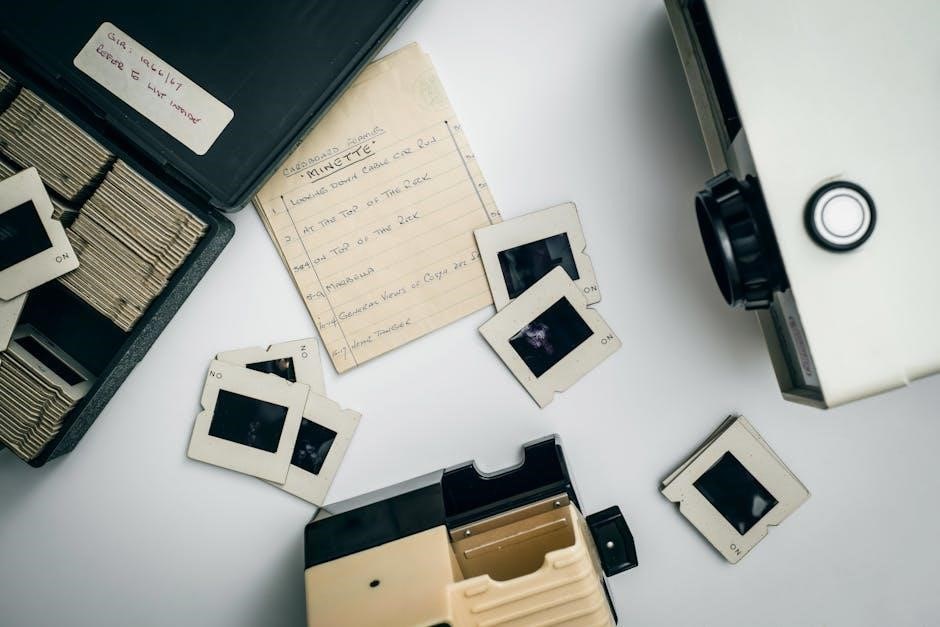
The Optoma EP735 boasts a native resolution of 1024×768, delivering clear and detailed images. Its brightness reaches 2600 ANSI lumens, suitable for well-lit environments. Contrast ratio is 2000:1, enhancing image depth. Lamp life extends up to 2000 hours (standard mode) and 4000 hours (eco mode).
Dimensions are 281 x 221 x 82 mm, with a weight of 2.9 kg. Supported resolutions include VGA, SVGA, and XGA. Input connectors feature HDMI, VGA, and USB. Throw ratio ranges from 1.96-2.82:1, offering flexible placement options.
Available Manuals and Documentation (Including Russian & Arabic versions)
Comprehensive resources are readily available to support your Optoma projector experience. User manuals, in English and other languages like Russian (PDF format) and Arabic (عربى ー United Arab Emirates PDF), provide detailed instructions. Technical descriptions (Deutsch auto.pdf) and technical drawings (ML1-ZW_ZH_ZU506) are also accessible.
Brochures in English (PDF) offer an overview of features. These documents, sourced from the Internet Archive, ensure you have the information needed for setup, operation, and troubleshooting. Find these resources to maximize your projector’s potential.