Act 2 Overview

The second act deepens the Salem conflict, spotlighting Proctor’s moral struggle and Abigail’s manipulations. Tension rises as the court’s hysteria escalates, forcing characters to confront truth, fear, and loyalty. Key moments reveal the fragile balance between justice and vengeance Hope flickers in darkness
Key Themes
Act 2 of The Crucible intensifies the examination of human nature under pressure. The theme of integrity versus self‑preservation surfaces as John Proctor wrestles with the choice between exposing the truth and protecting his reputation. Hysteria spreads like a contagion, illustrating how fear can override reason and lead to collective paranoia. The power of accusation is highlighted; a single word can destroy lives, and the court’s authority is shown to be both a shield and a weapon. Gender dynamics become more pronounced, as women’s voices are amplified while men’s doubts are silenced. The motif of reputation is a double‑edged sword, offering protection yet demanding sacrifice. Guilt and redemption intertwine, as characters confront their past actions and seek absolution. Finally, the theme of community versus individuality challenges the notion of collective identity, questioning whether the group’s safety justifies the loss of personal freedom. The interplay of these themes underscores the moral ambiguity of the characters, revealing how personal integrity clashes with communal survival, and how the pursuit of truth can become a perilous act that threatens both individual and collective identities. In this climactic act, the characters confront the consequences of their choices, and the tension between personal conscience and public expectation reaches a breaking point, illustrating the fragile balance of justice in a society gripped by fear!!!
Major Characters in Act 2
John Proctor remains the central figure, his internal conflict intensifying as he confronts the court’s demands and his own conscience. Abigail Williams continues to manipulate, using fear to maintain power and control over Salem’s social fabric. Reverend Hale’s skepticism grows, leading him to question the legitimacy of the trials and the validity of the accusations. Elizabeth Proctor faces mounting pressure, her reputation at stake, while her husband’s actions threaten to unravel their marriage. Giles Corey, though absent from the courtroom, is referenced as a symbol of resistance, his steadfast refusal to plead echoing through the proceedings. Mercy Lewis, a former servant, becomes an unwitting witness, her testimony reflecting the desperation of those caught in the hysteria. The court officials, including Judge Danforth and Deputy Governor Danforth, embody the institutional authority that enforces the proceedings, while the townsfolk, such as Hales and Quincey, illustrate the community’s divided loyalties. Each character’s choices propel the narrative forward, revealing the complex interplay between personal integrity, societal pressure, and the pursuit of justice in Act 2 of The Crucible.
John Proctor’s internal struggle is compounded by his fear of losing Elizabeth’s trust and the community’s judgment. Abigail’s cunning is evident as she manipulates witnesses, orchestrating false confessions to protect herself and her allies. Giles Corey’s legacy is invoked by the townspeople, symbolizing the cost of standing against injustice. Mercy Lewis’s testimony, though reluctant, underscores the desperation of those trapped in the hysteria. The court’s officials, particularly Judge Danforth, embody the rigid enforcement of law, while the townsfolk, represented by Hales and Quincey, reflect the divided loyalties within Salem. Their actions Salem!.
Setting Details
Act 2 of The Crucible unfolds in the austere, candlelit courtroom of Salem’s Salem County Courthouse, a modest wooden building that doubles as the town’s hub for justice and rumor. The interior is dominated by a long, scarred oak table, its surface scarred by generations of testimony, and a single, flickering oil lamp that casts wavering shadows across the faces of the accused, the magistrates, and the witnesses. The walls, paneled with dark wood, are adorned with faded portraits of former judges and a single, tattered banner proclaiming “Justice Prevails.” The courthouse’s austere atmosphere is punctuated by the distant tolling of the town bell, a reminder of the ever-present threat of divine judgment. Outside, the town square is lined with modest clapboard houses, their shutters closed against the chill of early autumn, and a small, weathered well that serves as the communal water source. The air carries the scent of pine and the faint, acrid smell of the town’s recently burned barns, a lingering reminder of the previous year’s witch trials. The setting is further intensified by the presence of the Salem church, its steeple looming in the background, a constant reminder of the town’s religious fervor. The courthouse’s austere, candlelit interior, the town’s modest homes, and the looming church steeple together create a setting that reflects Salem’s fragile balance between piety and paranoia, and the looming threat of judgment that permeates every corner of the town. The tension lingers, echoing the town’s fragile equilibrium.
Symbolism in Act 2 is layered and resonant, weaving the personal with the supernatural. The most striking motif is the recurring image of the “witch’s mark,” a physical blemish that becomes a metaphor for guilt and social stigma. When Abigail’s accusations gain traction, the mark is no longer a mere scar; it becomes a visible sign of moral corruption, a tangible proof that the town’s fear has turned into a weapon. The courtroom itself is a symbol of the fragile balance between law and hysteria. Its benches, lamp, and oak table echo judgment weight.

Conflict Development
Act 2 escalates Salem’s turmoil as John Proctor confronts his conscience, while Abigail manipulates fear to secure power. The court’s frenzy turns personal vendettas into public hysteria, forcing townsfolk to choose between truth and survival Tension peaks as loyalties fracture. hope wanes.!
John Proctor’s Dilemma
John Proctor’s dilemma in Act 2 centers on the clash between his conscience and the escalating hysteria that threatens Salem’s fragile order. He is haunted by the memory of his affair with Abigail, a secret that now fuels the town’s witch trials. Proctor wrestles with the choice of whether to expose Abigail’s lies, risking his own reputation and safety, while remaining silent and preserving his family’s honor. The weight of his past transgression forces him to confront the moral cost of speaking truth in a community that rewards conformity. He debates whether the court’s pursuit of justice is genuine or merely a vehicle for vengeance. In the courtroom, Proctor’s internal battle intensifies as he must decide whether to testify against Abigail, thereby risking being labeled a witch himself, or to protect his wife Elizabeth and the town’s fragile peace. The stakes rise when he realizes that his refusal to sign a false confession could be interpreted as an admission of guilt, while a confession could save lives but destroy his integrity. Proctor’s dilemma is amplified by the pressure from Reverend Hale, who urges him to stand firm, and by the fear that his silence may allow Abigail’s manipulation to continue unchecked. His struggle embodies the broader theme of individual responsibility versus collective fear, and it foreshadows the tragic consequences that will unfold as the trials reach their climax. The tension between personal redemption and communal survival drives the narrative forward, making Proctor’s choice a pivotal moment in the play’s moral arc. His conscience, torn between love and duty, echoes the town’s fear, weight of truth!!
Abigail’s Motives
Abigail Williams’ motives in Act 2 are driven by a complex blend of personal ambition, revenge, and a desire for power. After her affair with John Proctor, she feels betrayed and humiliated, and she uses the Salem witch trials as a weapon to eliminate those who threaten her. Abigail’s primary goal is to secure her position within the community by manipulating the court and the townspeople, thereby ensuring her own safety and influence. She also seeks to destroy Elizabeth Proctor, who represents the moral authority that could expose her. By accusing Elizabeth of witchcraft, Abigail hopes to remove the obstacle to her relationship with John and to secure a future that she believes is denied to her. Additionally, Abigail’s motives are fueled by a deep resentment toward the Puritanical society that condemns her for her sexuality and her transgression. She exploits the fear of the unknown and the collective hysteria to create a narrative that serves her personal agenda. Her manipulations are not merely reactive; she actively orchestrates the accusations, convincing other girls to participate in the frenzy. Abigail’s motives also reveal her desperation to control the outcome of the trials, as she knows that the court’s decisions will shape her fate. In essence, Abigail’s motives are rooted in a combination of personal vendetta, a craving for power, and a strategic use of the community’s fear to achieve her ends
Her manipulation extends beyond the courtroom; she leverages her relationships with Mary Warren and other girls to maintain a network of witnesses that can be turned on anyone she deems a threat. She is also aware that the court’s reliance on spectral evidence gives her an advantage, allowing her to fabricate evidence with relative ease. By controlling the narrative, Abigail ensures that her voice dominates the proceedings, and she positions herself as a key player in Salem’s social hierarchy. Her motives are not purely selfish; she also believes that by eliminating the moral gatekeepers, she can reshape Salem into a place where her desires are unchallenged. This vision, however, is built on a foundation of deceit, fear, and manipulation, and it ultimately leads to the tragic unraveling of the community

Mercy’s Role
Mercy, the young woman who serves as a confidante to the court, plays a subtle yet pivotal role in Act 2 of The Crucible. Though she is often overlooked, her presence provides a quiet counterpoint to the escalating hysteria. Mercy’s primary function is to act as a conduit for information, gathering whispers from the townsfolk and relaying them to the magistrates. Her observations of the girls’ behavior, especially Abigail’s manipulations, allow her to anticipate the next wave of accusations. By quietly noting inconsistencies in testimonies, Mercy offers the court a semblance of rationality amid the chaos. Additionally, Mercy’s empathy toward the accused offers a glimmer of hope; she often visits the condemned, offering comfort and reminding them that their dignity remains intact. Her subtle interventions—such as leaving a small token of faith at a victim’s bedside—serve as a quiet rebellion against the court’s cruelty. In the broader narrative, Mercy’s role underscores the theme that even in a society consumed by fear, individual acts of kindness can sustain humanity. Her presence also highlights the importance of listening, as her careful attention to detail provides a counterbalance to the court’s reliance on spectral evidence. Ultimately, Mercy’s role is a quiet, steadfast reminder that compassion can persist even when the world seems to have lost its moral compass.
Mercy’s quiet defiance is evident when she discreetly records names of those who speak against the court, preserving a record that could later challenge proceedings. Her subtle acts, like offering a candle to the accused or quietly arranging a sympathetic witness, demonstrate she is an active participant in the moral struggle!!

Critical Scenes

The courtroom assembly erupts as accusations spiral, forcing Proctor to confront his conscience. Abigail’s relentless lies intensify, while Mercy’s quiet defiance offers a fragile hope. The scene culminates in a tense, pivotal moment that shapes Salem’s fate. The tension rises, sealing Salem’s fate in a courtroom crucible.

The Courtroom Assembly
In Act 2, the courtroom becomes a volatile arena where fear, truth, and manipulation collide. Reverend Hale faces a community steeped in suspicion. Judge Danforth, pressured by the townspeople’s cries, must decide whether to trust the girls’ testimony or protect the town’s reputation. Abigail Williams, the catalyst, weaves deceit, convincing the court that the afflicted girls are possessed by demonic forces.
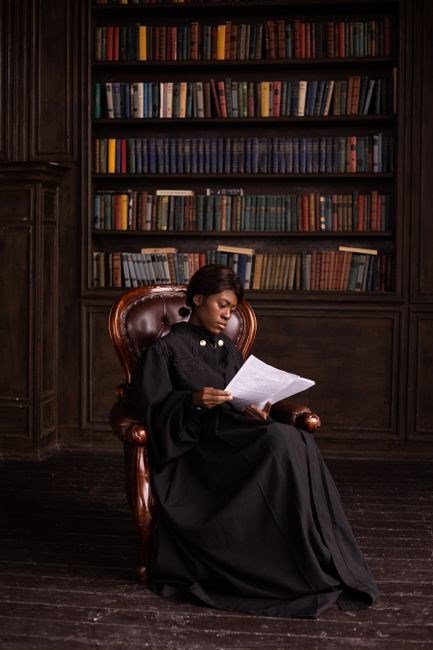
John Proctor, a farmer with a tarnished reputation, emerges as the moral fulcrum. Torn between conscience and family safety, he questions whether to expose the falsehoods or remain silent. His presence in the courtroom signals a turning point: he must decide whether to confront the court’s injustice or succumb to Salem’s fear. The tension mirrors the larger crisis of conscience gripping Salem.
The courtroom’s atmosphere thickens with each testimony, escalating hysteria. Reverend Parris’s presence adds pressure, while the magistrates, led by Danforth, are swayed by the crowd’s emotional volatility. Hale’s doubts reveal uncertainty about the girls’ reliability, yet the court’s momentum forces him to remain silent. Fear, not evidence, drives the decisions, highlighting unchecked authority.

As proceedings reach climax, Hale’s doubts reveal uncertainty about the trials’ legitimacy. He questions the girls’ testimonies, yet the court’s momentum forces him to remain silent. The courtroom, once orderly, now mirrors chaos outside, each word bearing the weight of potential doom. Proctor’s integrity is tested, forcing him to confront the court’s injustice and the town’s hysteria. The stage is set for the conflict that will define the play’s climax, as Salem’s fate hangs in the balance of truth and fear! The courtroom’s silence tests every character’s resolve deep!
Proctor’s Accusation
John Proctor’s moment of truth arrives when he steps forward to challenge the court’s narrative. He confronts the hysteria by admitting his affair with Abigail, exposing her motives and the falsehoods that fuel Salem’s panic. His confession is a strategic act: by revealing the truth, he hopes to undermine Abigail’s credibility and protect his wife, Elizabeth. Proctor’s words are raw, yet he maintains a calm demeanor, refusing to let fear dictate his actions. He declares, “I have no power to bring the devil into Salem, but I will not let the devil’s lies destroy my family.” His accusation is a direct attack on the girls’ testimony, calling into question the reliability and the legitimacy of the court’s proceedings. In doing so, he risks his own reputation and safety, but he believes that truth must prevail over the town’s collective fear. The courtroom’s reaction is immediate: some witnesses recoil, while others, swayed by Danforth’s authority, remain silent. Proctor’s boldness forces the court to confront the possibility that the hysteria may be based on personal vendettas rather than supernatural evidence. This pivotal scene underscores the theme of integrity versus conformity, as Proctor chooses to stand against the mob, even at great personal cost. His decision, though fraught with peril, marks a turning point that will reverberate through Salem’s future, challenging the town’s collective conscience and setting the stage for the inevitable clash between truth and hysteria, a conflict that will test every soul present in the courtroom. Resonate court.!!
Hales & Quincey Testimony
In Act 2, the court’s focus shifts to the testimony of Hales and Quincey, two townsfolk whose statements reveal the underlying social tensions fueling Salem’s witch trials. Hales, a respected farmer, testifies about the strange occurrences in his barn, describing how his chickens vanished and how he heard whispers that seemed to echo the girls’ accusations. He claims that the “witchcraft” was a manifestation of the town’s collective fear, not the supernatural. Quincey, a merchant, counters Hales by asserting that the girls’ claims were not merely rumors but evidence of a larger conspiracy. He points to the pattern of accusations—how the same names reappear in different contexts—and suggests that Abigail and her cohort are manipulating the court for personal gain. Both witnesses, though seemingly contradictory, highlight the fragile social fabric of Salem. Their testimonies expose the town’s reliance on rumor and the ease with which fear can be weaponized. Hales’ calm tone contrasts with Quincey’s defense, highlight the divide rational hysterical views. The court, however, remains skeptical, as the magistrates prioritize the girls’ evidence over the farmers’ accounts. This testimony serves as a critical pivot point, forcing the audience to question the legitimacy of the court’s proceedings and the moral integrity of its participants. The interplay between Hales and Quincey underscores the theme of truth versus manipulation, foreshadowing the escalating conflict that will ultimately test the community’s resilience and moral compass. The scene ends with chilling reminder that in Salem, even ordinary voices can be drowned out by hysteria, leaving the town’s very futureand uncertain and people divided.
Analytical Insights
Act 2’s analysis reveals how Miller uses courtroom drama to expose societal paranoia, illustrating how fear corrodes justice. The interplay of confession, guilt, and power dynamics underscores the fragility of moral authority, urging readers to scrutinize authority’s role in justice. Narrative invites reflection!!!
Dramatic Techniques
Overall, Act 2’s techniques—tight pacing, dramatic irony, staging, rhythmic dialogue, and gestures—create a powerful experience that deepens!! the tragedy’s emotional impact and invites reflection on truth and justice for deeper insight!!